
“Encore's staff is knowledgeable and friendly with just the right amount of push to encourage the patient through sometimes difficult exercises.”
Pickleball Injury Physical Therapy and Sports Injury Rehab in Corvallis
Most people who call us about pickleball aren't hurt in a dramatic way. Something started aching after a long morning of games, or a lunge for a dink left a knee or an Achilles unhappy, and now the shot you used to hit without thinking is the shot you're avoiding.
At a glance
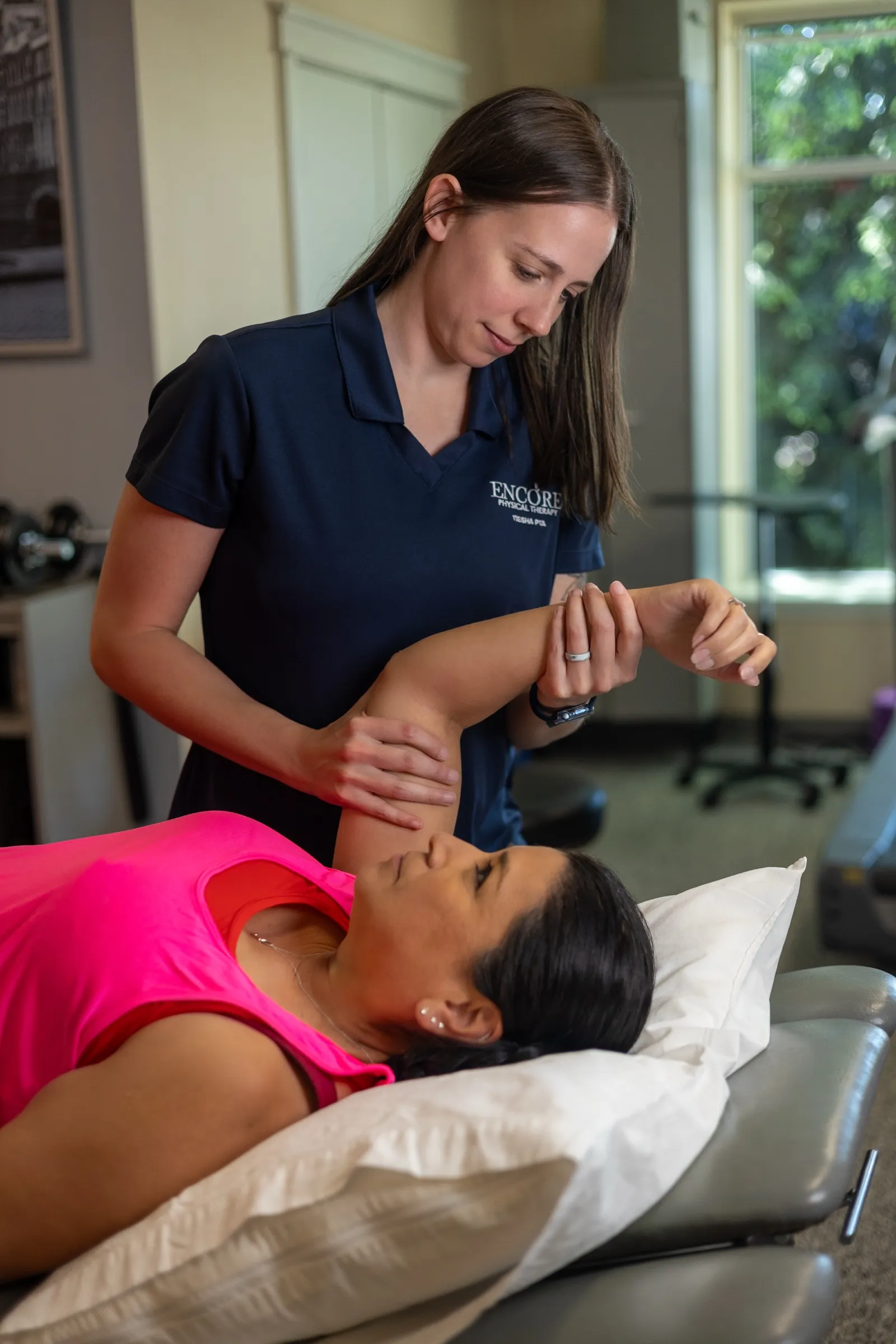
Encore Physical Therapy treats pickleball injuries for players in Corvallis, Albany, Philomath, Newport, and across Benton and Linn Counties. We handle shoulder, elbow, knee, ankle, and low back problems that come out of paddle sport, starting with a one-on-one evaluation with a licensed physical therapist and a plan to get you back on the court.
- Seen in weeks, not months. New evaluations are usually available within a couple of weeks.
- Direct access clinic. In Oregon you can often start physical therapy without a doctor's referral. No referral needed to call us.
- Medicare and most commercial insurance accepted, with cash pay available. We'll check your plan when you call.
- One-on-one with a licensed PT. Your evaluation is done by a physical therapist, not handed off.
Common Injuries We Treat
Paddle sport loads the body in a specific pattern, so the complaints tend to cluster in a few places.
Elbow, wrist and hand
- Pickleball (tennis) elbow from gripping and backhands
- Wrist, hand and finger injuries from falls
Shoulder
- Rotator cuff pain from overheads and serves
Lower leg
- Achilles and calf strains on the push-off
- Ankle sprains on side-to-side moves
Knee, hip and back
- Kneecap pain and instability
- Low back, hip and SI joint pain
Not sure which of these describes what you're feeling? Call (541) 758-2235 and we'll talk it through.
Every condition we see, in detail
We don't chase symptoms. We work out what's actually driving the pain, treat it, and teach you enough about your own body that you can keep playing well past the season you're worried about.
Paddle sport loads the body in a specific pattern, and the complaints tend to cluster. These are the ones we most often work with on the sports rehab side of the practice:
- Lateral elbow pain (often called pickleball elbow or tennis elbow). Gripping, blocking, and repeated backhands irritate the tendons on the outside of the forearm.
- Shoulder and rotator cuff pain. Overheads, serves, and reaching for high balls stress the cuff and the tissue around it, especially when overhead volume ramps up quickly.
- Achilles and calf strains. The split step and the sudden push off toward a drop shot are hard on the calf complex.
- Ankle sprains. Side-to-side movement on a hard court, often with a shoe that isn't built for lateral work.
- Knee pain, including patellofemoral (kneecap) pain and instability. Low volleys, lunges, and repeated squatting positions concentrate load at the front of the knee.
- Low back, hip, and sacroiliac pain. Rotation plus flexion, repeated a few hundred times a session, finds the stiff link in the chain.
- Wrist, hand, and finger injuries from falls, plus general sprains, strains, and soft tissue injuries.
If you're returning after a surgery rather than an overuse problem, our pre- and post-surgery rehabilitation page covers that pathway.
How These Injuries Happen
The court is small, so your calf, ankle and knee absorb sharp starts and stops, every drive rotates the hips and spine, and every block grips the paddle. Volume is the other half: an hour turns into three, and tissue tolerance doesn't rise as fast as enthusiasm does.
Why it happens, in detail
The court is small, which is exactly why the sport is hard on tissue. You cover ground in short, sharp bursts instead of long strides, so the calf, ankle, and knee absorb a lot of acceleration and deceleration in a small space. Add rotation at the hips and spine on every drive, and grip tension on every block, and you get a repetitive load pattern the body has to be conditioned for.
Volume is the other half of it. Games are short and social, so an hour turns into three without anyone deciding it should. Tissue tolerance doesn't rise as fast as enthusiasm does, and that gap is where tendon pain usually starts.
The useful part is that this is measurable. During your evaluation we look at how your ankle, hip, and shoulder actually move, where the motion is being borrowed from a joint that shouldn't be supplying it, and what strength is missing. Kathy Lynch, PT, DPT, has completed training in the Selective Functional Movement Assessment (SFMA), a structured way of testing movement patterns rather than testing one painful spot in isolation.
What Care Looks Like at Encore
Treatment follows what your evaluation finds, not a template.
- A one-on-one evaluation A licensed physical therapist finds the source of your symptoms, explains it in plain language and sets goals with you.
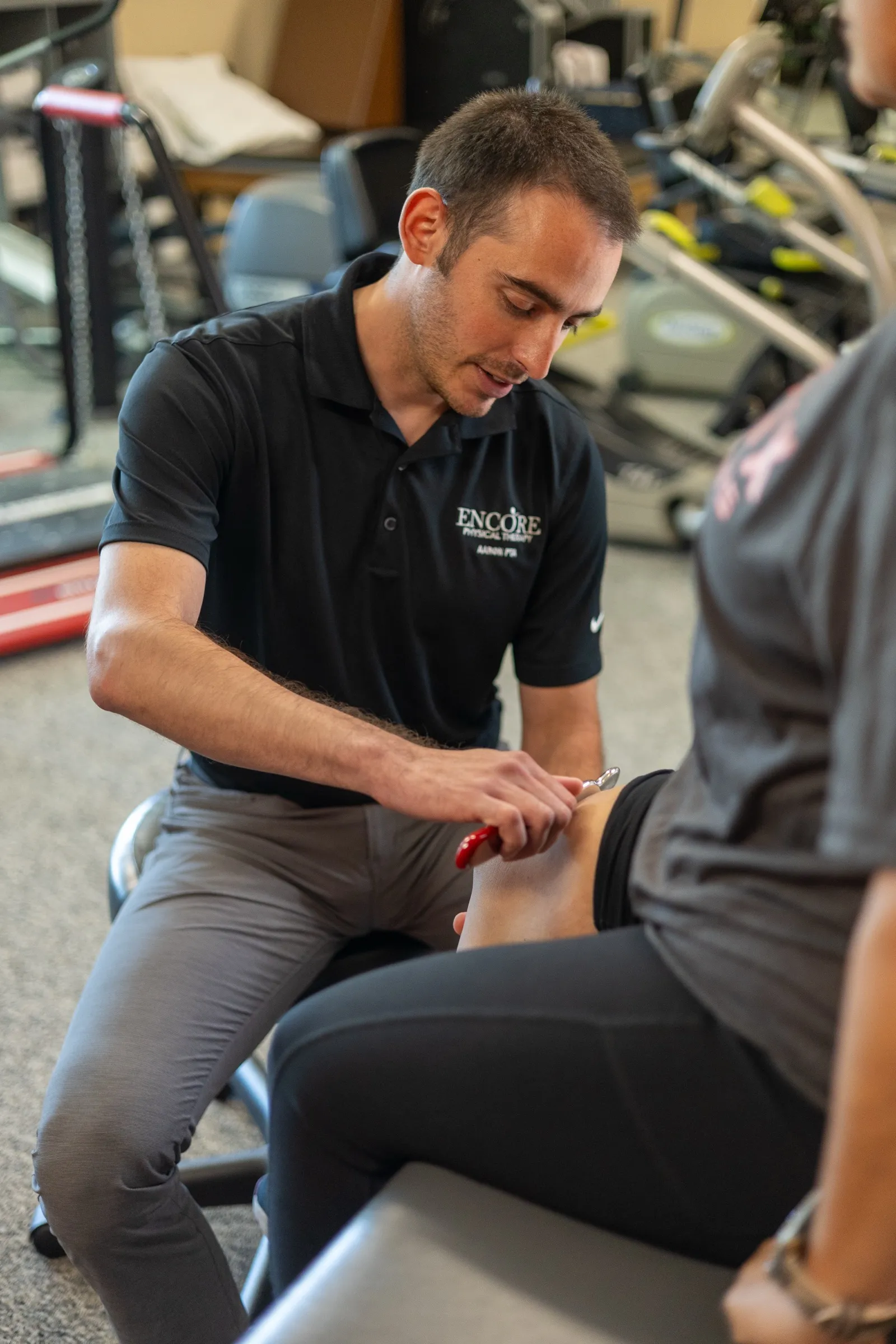
- Hands-on treatment Skilled joint and soft-tissue work, with heat, cold, ultrasound or taping when they help the tissue settle.
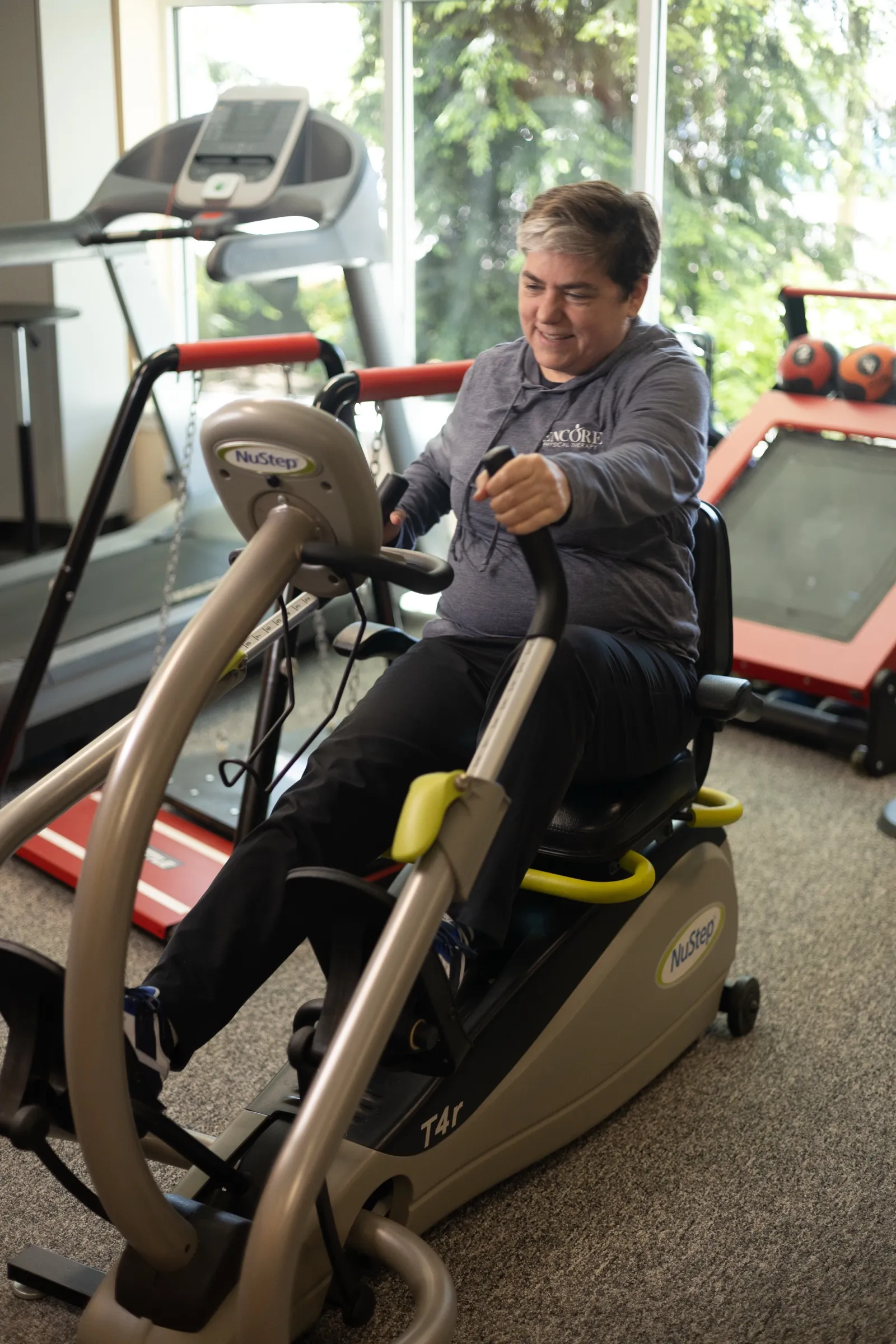
- Exercise that holds Clinic and home exercise restores flexibility and strength. It's the part that holds after you stop coming in.
- A plan that adjusts If you're not improving, the plan changes rather than repeats.
The hands-on techniques we use
Your first visit is a thorough one-on-one evaluation with a licensed physical therapist. We find the source of the symptoms, explain what we found in plain language, and set goals with you. From there, treatment usually combines several of the following, based on what works for your specific problem:
- Manual therapy. We use a wide range of hands-on techniques, drawing on methods from Geoffrey Maitland, Robin McKenzie, Freddy Kaltenborn, Brian Mulligan, Strain Counterstrain, Muscle Energy, and the North American Institute of Manual Therapy.
- Prescriptive exercise, performed in the clinic and at home, to restore flexibility, strength, and integrity to the affected area. This is the part that holds after you stop coming in.
- Therapeutic modalities. Heat or cold early on to reduce pain and inflammation, and ultrasound (deep heat delivered by sound waves) or electrical stimulation where it helps reduce pain or improve muscle activity.
- Taping, used to support tissue while it heals or to change how a joint loads during play.
We adjust quickly. If you're not showing improvement, the plan changes rather than repeating.
Getting back on the court
- Calm the irritated tissue so you can move
- Restore missing motion and strength at the ankle, hip or shoulder
- Load lunges, split steps and overheads in the clinic first
- Dinking and drills before full games
- Leave with a home program and the warning signs
More on getting back
Rest alone rarely fixes a pickleball injury, because the thing that caused it was a mismatch between what your tissue tolerates and what your game demands. So we rebuild tolerance in steps and match them to what you're actually trying to get back to.
- Calm the irritated tissue with hands-on treatment and, where appropriate, a modality, so you can move enough to make progress.
- Restore the motion and strength the test found missing, usually at the ankle, hip, or shoulder.
- Rebuild the specific pattern. Lunging, split steps, overhead reach, and rotation loaded on purpose in the clinic before you load them on the court.
- Stage the return. Dinking and drills before full games, then game time added in a controlled way rather than all at once.
- Keep what you built. You leave with a home program and an understanding of what to watch for.
We'll be honest with you about timelines instead of guessing at one. Tendons in particular follow their own schedule.
Staying on the court in the first place
Prevention for pickleball comes down to preparing the tissue for the specific demands of the game and controlling how fast your playing volume climbs. That usually means calf and ankle strength for the push-off and the landings, hip and trunk strength for rotation, shoulder capacity if you play a lot of overheads, a real warm-up before the first serve rather than after the second game, and a gradual build when you add tournament play or a new weekly session.
If nothing hurts yet and you'd rather keep it that way, our injury prevention and conditioning page is the better starting point.
Who You’ll Work With
Your evaluation is done by a licensed physical therapist, and you see familiar faces through your plan of care rather than a new person each visit.

Chris Guempel, PT, MPT
owner, physical therapist since 2001, founded Encore in 2009
Kathy Lynch, PT, DPT
Doctor of Physical Therapy, continuing education in cervical, lumbopelvic and sports injuries, SFMA trainedNathan Smith, PT, MPT
physical therapist
Tiesha Oare, PTA
physical therapist assistant, joined Encore in 2020
Aaron Nobiletti, PTA
physical therapist assistant, background in exercise science
Read reviews in our patients' words
Every review on our Google Business Profile is public, unedited, and written by the people we've treated and cared for. We're honored to have received nearly 200 five-star reviews, and to have helped each of those people reach a health goal.
“I felt very good every step of the way from making appointments, talking about my needs and lifestyle, and working with the therapists to come up with my healing plan.”
“Staff is extremely thorough, mindful, and meets all expectations of service. Chris and Aaron are so great, I’m always happy to be working with them.”
Questions We Hear a Lot
Do I need a doctor's referral to be treated for a pickleball injury?
No. Encore is a direct access clinic, which means you can usually start physical therapy in Oregon without a referral. Some insurance plans still ask for one, so call us at (541) 758-2235 and we'll check your plan.
How soon can I get an evaluation?
We can typically schedule a new evaluation within a couple of weeks. Call (541) 758-2235 and reception will work out a time with you.
Do I have to stop playing pickleball while I'm in therapy?
Not always. It depends on the injury and how irritable it is. In many cases we modify how much and how you play rather than stopping altogether, and we'll tell you clearly which one applies to you after the evaluation.
Do you accept Medicare and insurance?
Yes. We accept Medicare and most commercial insurance plans, and cash pay is available. We'll verify your coverage before you start rather than leaving you to guess.
What happens at my first visit?
Your first visit is a one-on-one evaluation with a licensed physical therapist. We'll talk through what happened and what you want to get back to, look at how you move to find the source of the problem, and then explain what we found and what your plan looks like.
What should I bring?
Your insurance card and a photo ID, a list of the medications you take, and any paperwork from your surgeon or doctor, including post-op instructions or a referral if you have one. Wear clothes that let us see and move the area we're treating: shorts for a knee or hip, a loose shirt or tank top for a shoulder.
Where to Go Next
Ready When You Are
Get Back to Your Life
Recover stronger. Move better. Stay active. Whether you're recovering from surgery or an injury, managing chronic pain, or working to prevent future injuries, contact us today to get started.