
“They got me in quickly when I had an injury and treated the symptoms while treating me as a person. Kathy and Aaron were attentive and adjusted my program as I healed.”
Running Injury Physical Therapy in Corvallis
Most running injuries don't announce themselves. They start as a tight spot you can run through, then a nagging ache at mile three, then something that changes the way you land.
At a glance
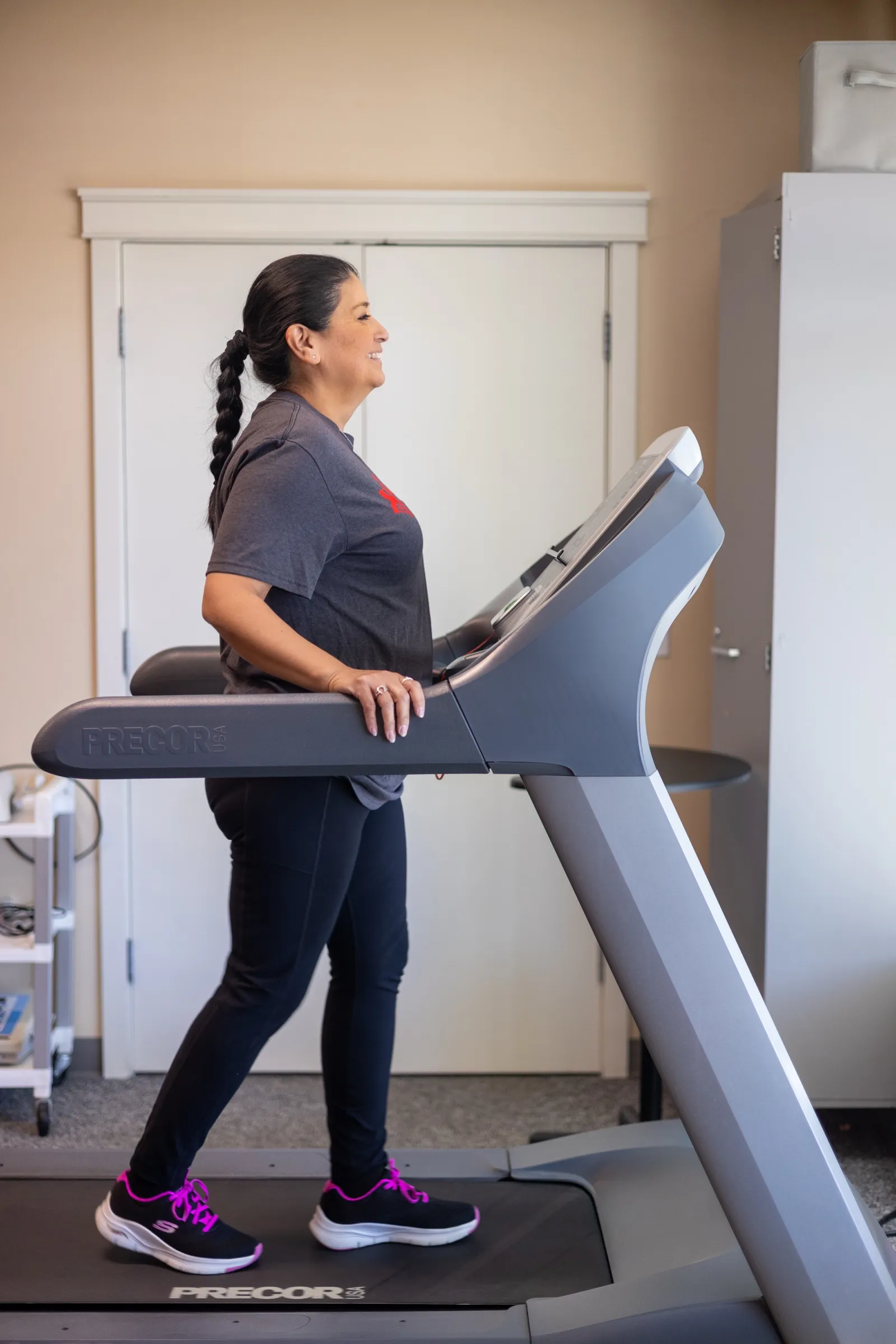
Running injury physical therapy at Encore Physical Therapy, 2609 NW 9th Street in Corvallis, Oregon. We treat knee, shin, hip, Achilles, and foot pain in recreational and competitive runners, review how you walk and run, and build a step-by-step return to mileage. Serving Corvallis, Albany, Philomath, Newport, Benton and Linn Counties. Hours are Monday through Friday, 8am to 5pm.
- Evaluations in weeks, not months. We can typically schedule a new evaluation within a couple of weeks.
- No referral needed in most cases. Oregon allows direct access, which means you can usually start physical therapy without seeing a doctor first.
- Medicare and most commercial insurance accepted, with cash pay available. Details on the contact page.
- One-on-one with a licensed physical therapist. Your evaluation is done by a PT, not handed off.
Common Injuries We Treat
Running is repetitive, single-leg, high-load work, so the problems tend to cluster in the same places.
Knee and shin
- Pain around the kneecap on downhills and stairs
- Shin pain and lower-leg strains
Foot, ankle and Achilles
- Achilles and calf pain
- Heel pain and old ankle sprains
Hip and back
- Hip, glute and SI joint pain
- Low back pain that grows with mileage
Getting back
- Sprains, strains and fractures
- Pain tied to how you land and push off
Not sure which of these describes what you're feeling? Call (541) 758-2235 and we'll talk it through.
Every condition we see, in detail
We work with runners to find out what is actually driving the pain, treat it, and get you back to the mileage you want without guessing your way there.
Sports injury rehab for runners in Corvallis, Albany, Philomath, Newport, and across Benton and Linn Counties.
Running is a repetitive, single-leg, high-load activity, so the problems tend to cluster in the same places. The ones runners bring us most often include:
- Knee pain and patellofemoral problems, including pain under or around the kneecap that shows up on downhills and stairs
- Shin pain and lower-leg soft tissue injury to muscle, tendon, and connective tissue
- Achilles and calf pain, from morning stiffness in the tendon to pain that eases during a run and returns afterward
- Foot and ankle pain and dysfunction, including heel pain and old sprains that never fully settled
- Hip pain and stiffness, glute and lateral hip pain, and sacroiliac (SI joint) irritation
- Low back pain that gets worse with mileage or with speed work
- Sprains, strains, and fractures, and the return-to-running phase after a period off your feet
- Gait-related problems, including pain tied to how you load and push off
If you are coming back from surgery rather than an overuse injury, our rehabilitation page covers pre- and post-surgical care in detail.
How These Injuries Happen
Almost every running injury is a load problem: load rose faster than the tissue could adapt, capacity dropped, or the load isn't being shared well. Pain shows up where the tissue got overloaded, which often isn't where the problem started, so we treat the reason, not just the sore spot.
Why it happens, in detail
Almost every running injury is a load problem. Either the load went up faster than the tissue could adapt (new mileage, new hills, a race block, a switch to speed work), or the tissue's capacity went down (time off, a change in shoes or surface, strength you lost somewhere along the way), or the load isn't being shared the way it should be.
That last one is where gait matters. If your hip isn't controlling the leg well at footstrike, the knee absorbs more than its share. If your calf and Achilles can't produce the force they used to, the foot and shin pick up the difference. The pain shows up at the site that got overloaded, which is often not the site that caused it. That's why treating only the sore spot tends to buy a few good weeks and then the same problem comes back.
We don't chase symptoms. We look at how the whole chain is working, explain what we find in plain language, and treat the reason the tissue got overloaded in the first place.
See how our sports injury rehab works across sports or call (541) 758-2235 to start with an evaluation.
What Care Looks Like at Encore
Your plan is built from what the exam finds, and it changes quickly if you aren't improving.
- A one-on-one evaluation A licensed physical therapist reviews your mileage, terrain, shoes and goals, then tests strength, mobility and how you run.
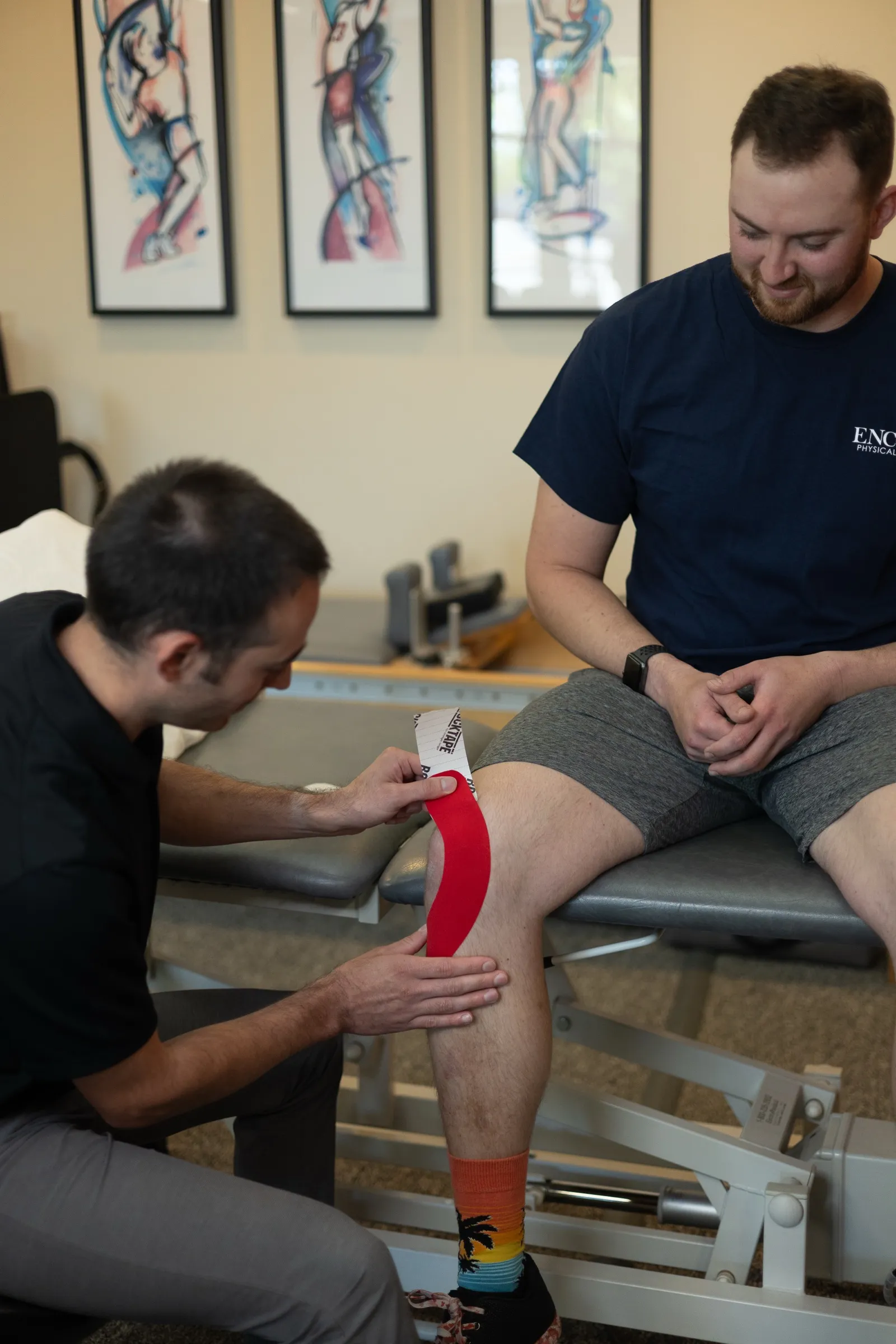
- Hands-on treatment Skilled joint and soft-tissue work, with heat, cold, ultrasound or taping early on when they help.
- Exercise that builds capacity Clinic and home exercise restores strength, then builds what your legs need to handle running load again.
- A plan that adjusts If you aren't improving, we change course quickly instead of repeating the same thing.
The hands-on techniques we use
The evaluation
You'll spend your first visit one-on-one with a licensed physical therapist. We take your running history (weekly mileage, recent changes, terrain, shoes, race goals), test strength and mobility through the hip, knee, ankle, and foot, and watch how you move, including walking and running mechanics where it's relevant to your symptoms. A thorough exam is what makes the rest of the plan specific to you.
Hands-on treatment
Our team uses an extensive repertoire of manual therapy, meaning hands-on techniques applied directly to joints and soft tissue. We draw on methods from Geoffrey Maitland, Robin McKenzie, Freddie Kaltenborn, Brian Mulligan, Strain Counterstrain, Muscle Energy, and the North American Institute of Manual Therapy.
Prescriptive exercise
Exercises done in the clinic and at home restore flexibility, strength, and integrity to the affected area, and then build the capacity your legs need to handle running load again.
Modalities when they help
Early on, heat or cold can bring down pain and inflammation. Ultrasound (deep heat delivered by sound waves) or electrical stimulation may be used to reduce pain or improve muscle activity. Taping is sometimes used to support the area while it heals. The treatment array is based on what actually works for you, and we change course quickly if you aren't improving.
Aaron Nobiletti, PTA has a particular interest in working with runners and other athletes, and Kathy Lynch, PT, DPT has completed training in the Selective Functional Movement Assessment (SFMA), a system for finding movement limitations that contribute to pain. You can meet the team on our About page.
Getting Back to Mileage
- Calm the tissue while staying as active as symptoms allow
- Rebuild strength in whatever failed: calf, hip or foot
- Reintroduce running with walk-run intervals on flat ground
- Add distance, then hills and pace, then race work
- Keep the strength work after you feel fine
More on getting back
"Rest until it stops hurting" is not a plan, and most runners have already tried it. What works better is a graded return, where load goes back on in planned steps and we watch how the tissue responds.
- Calm the irritated tissue while keeping you as active as your symptoms allow. Complete rest is rarely the goal.
- Rebuild capacity with strength and loading work targeted at whatever failed, whether that's the calf complex, the hip, or the foot.
- Reintroduce running in measured increments, often starting with walk-run intervals on flat, forgiving surfaces.
- Add back the hard parts in order: distance first, then hills and pace, then race-specific work.
- Set the maintenance plan so the strength work that got you back doesn't disappear the week you feel fine.
Throughout, you help set the goals. If your target is the next Corvallis half or simply running the riverfront loop three mornings a week without limping afterward, the plan is built around that.
Staying Ahead of the Next One
The best time to see a physical therapist is often before the injury forces you to. If you've noticed a recurring tight calf every training block, a hip that only complains on long runs, or you're stepping up mileage for a spring race, an evaluation can identify the weak link while it's still just a weak link.
Strength work, mobility work, and sensible load progression are the boring things that keep runners running into their seventies and eighties. We're happy to build that program with you rather than wait for something to tear.
Learn more about injury prevention and conditioning, or call (541) 758-2235 to schedule.
Who You’ll Work With
Your evaluation is done by a licensed physical therapist, and you see familiar faces through your plan of care rather than a new person each visit.
Ask for Aaron Nobiletti
Aaron Nobiletti, PTA, has a particular interest in working with runners and other athletes.

Chris Guempel, PT, MPT
owner, physical therapist since 2001, founded Encore in 2009
Kathy Lynch, PT, DPT
Doctor of Physical Therapy, continuing education in cervical, lumbopelvic and sports injuries, SFMA trainedNathan Smith, PT, MPT
physical therapist
Tiesha Oare, PTA
physical therapist assistant, joined Encore in 2020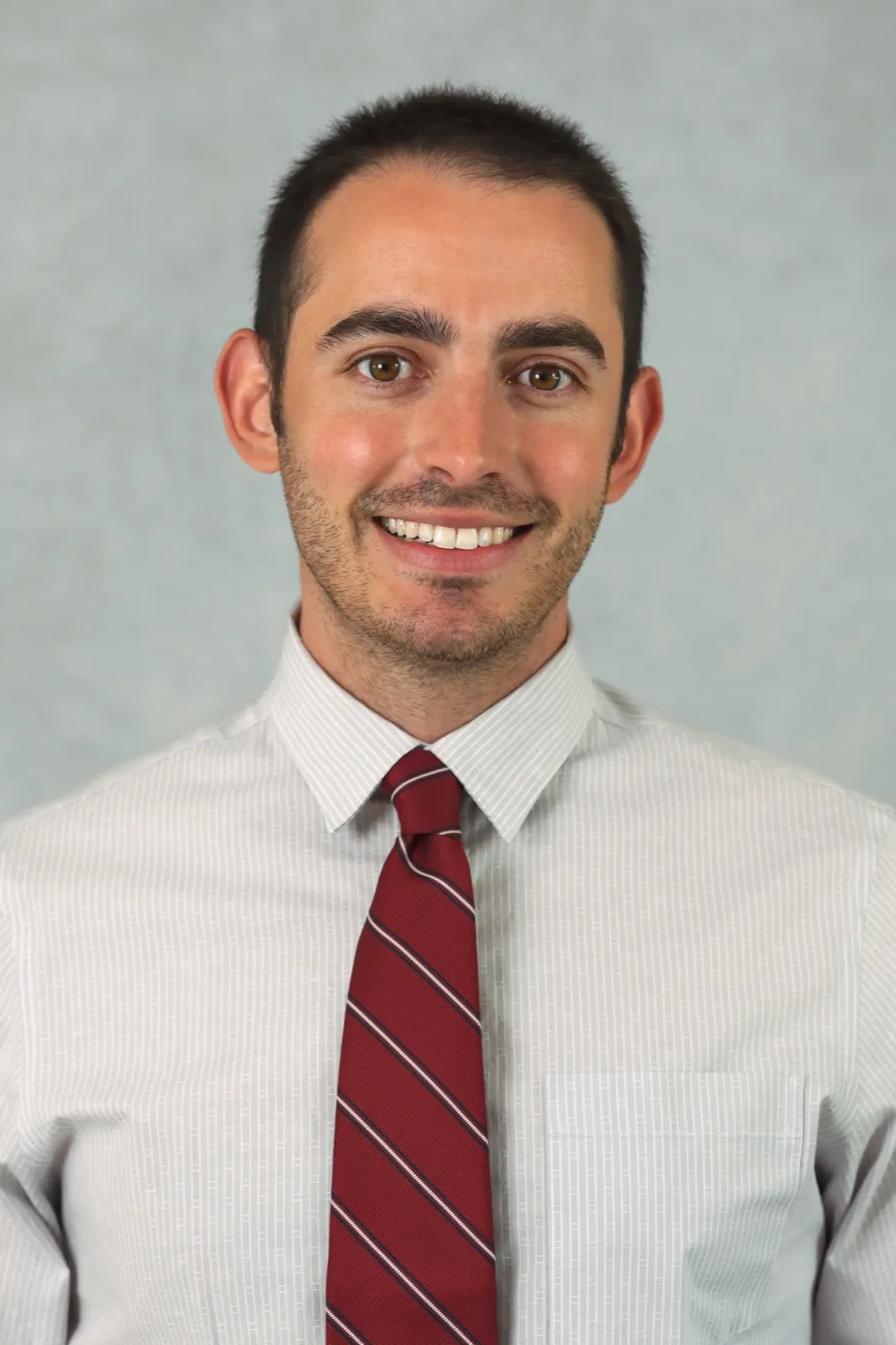
Aaron Nobiletti, PTA
physical therapist assistant, background in exercise science
Read reviews in our patients' words
Every review on our Google Business Profile is public, unedited, and written by the people we've treated and cared for. We're honored to have received nearly 200 five-star reviews, and to have helped each of those people reach a health goal.
“What impressed me the most was how she didn’t just focus on temporary relief—she equipped me with practical exercises that I still use to this day to keep my joints moving and muscles strong.”
“They assessed it was actually a back problem. After just one exercise, that was corroborated, despite two other PTs simply working on leg strength and hip exercises to address it.”
Questions We Hear a Lot
How soon can I get an evaluation?
We can typically schedule a new evaluation within a couple of weeks. Call (541) 758-2235 and reception will work with you on a time. If you use the contact form, reception tries to get back to you within a business day.
Do I need a doctor's referral to see a physical therapist for a running injury?
Usually not. Oregon has direct access, so you can self-refer and start physical therapy without a physician referral in most cases. Some insurance plans have their own requirements, and we can check your plan when you call.
Do I have to stop running while I'm in therapy?
Not always. Complete rest is rarely the goal. Depending on your injury and how irritable it is, we often keep you running in some modified form while we treat the cause and rebuild capacity.
Do you take Medicare and commercial insurance?
Yes. We accept Medicare and most commercial insurance plans, and cash pay is available. Call (541) 758-2235 and we'll check your specific plan with you.
What happens at my first visit?
Your first visit is a one-on-one evaluation with a licensed physical therapist. We'll talk through what happened and what you want to get back to, look at how you move to find the source of the problem, and then explain what we found and what your plan looks like.
What should I bring?
Your insurance card and a photo ID, a list of the medications you take, and any paperwork from your surgeon or doctor, including post-op instructions or a referral if you have one. Wear clothes that let us see and move the area we're treating: shorts for a knee or hip, a loose shirt or tank top for a shoulder.
Where to Go Next
Cross-training athletes often deal with more than one of these at once. Call (541) 758-2235 and we'll sort out what's driving the pain.
Ready When You Are
Get Back to Your Life
Recover stronger. Move better. Stay active. Whether you're recovering from surgery or an injury, managing chronic pain, or working to prevent future injuries, contact us today to get started.